

Nomex/aramid honeycomb is considered for aerospace, defence, rail and marine structures where low weight, high specific stiffness and fire/smoke requirements matter.
Short answer
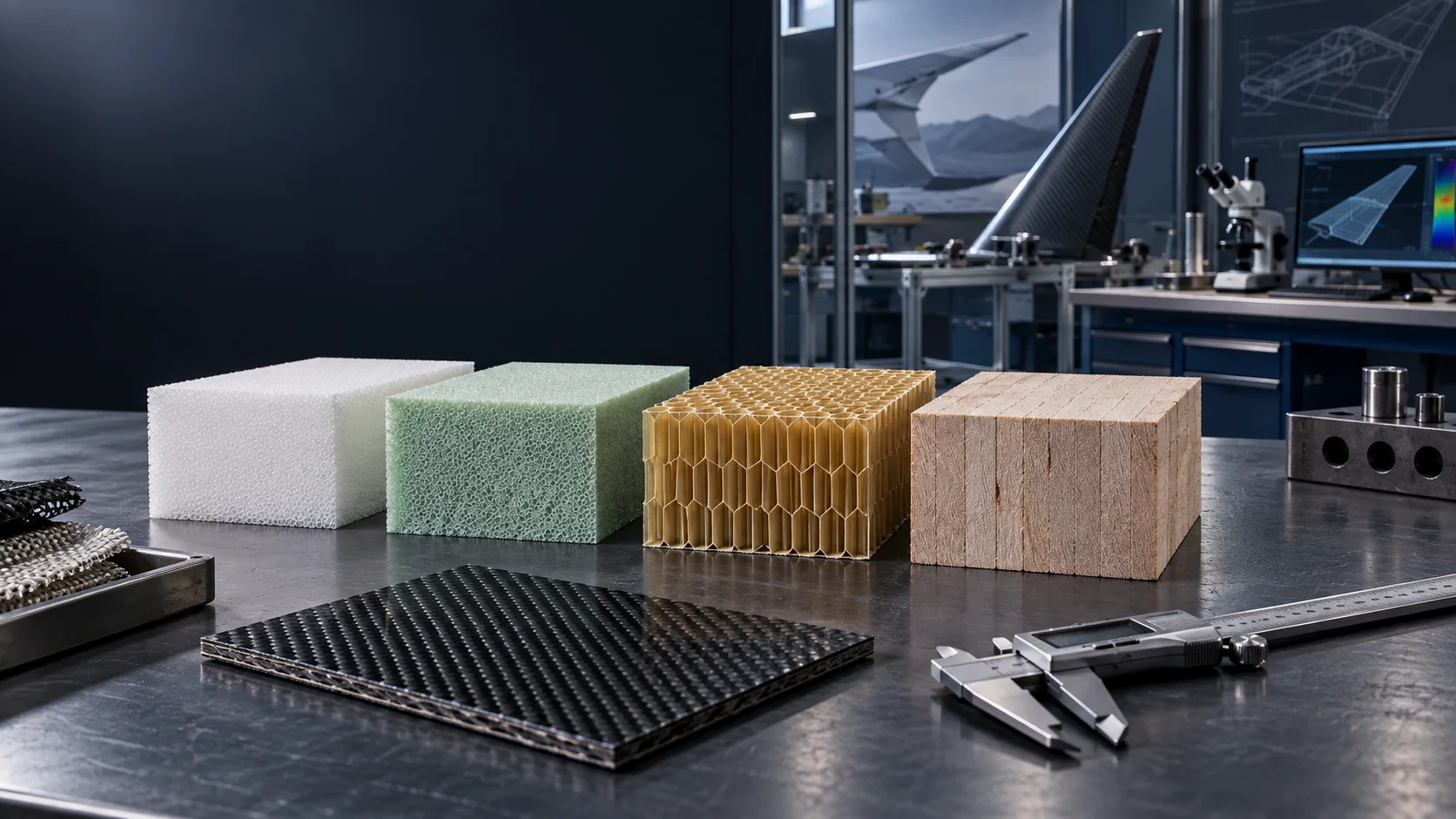
Nomex honeycomb is used in lightweight sandwich structures where cell direction, density, thickness and face sheets are designed together. Open cells make edge and insert details critical.
Why does it matter?
Honeycomb is mechanically anisotropic and behaves differently in ribbon and transverse directions. Wrong orientation can increase face wrinkling or local crushing risk.
Main sectors
Select by load, fire, moisture and process requirements rather than sector label alone.
- Aerospace: interiors, fairings and control surfaces
- Defence/UAV: lightweight bodies, covers and antenna structures
- Rail: interior panels and lightweight partitions
- Marine: special panels with validated moisture barrier and edge closure
Design checklist
Cell size, density and thickness are calculated with the face laminate.
- Ribbon direction and load axis
- Potting around inserts
- Edge closure
- Resin and adhesive compatibility
- Fire/smoke/toxicity documentation
Frequently asked questions
Is Nomex honeycomb water resistant?
Aramid paper and coating affect moisture behaviour; open cells require sealed edges and holes.
Does smaller cell size always improve performance?
No. Face support may improve, but density, resin use, cost and processing also change.
Conclusion and technical support
Compare cell size, density and applications in our Nomex/aramid honeycomb guide.
Sources
- /assets/uploads/catalogs/sdf-ata-nh-aerospace-grade-tds.pdf