


PMI foam is considered for UAV and defence parts for dimensional stability under heat/pressure, low creep and lightweight sandwich construction.
Short answer
PMI core suits lightweight parts that must retain mechanics and dimensions through prepreg/autoclave, high-temperature infusion or press processes.
Why does it matter?
UAV range and payload respond to gram-level savings, but weight reduction must not compromise joints, impact, temperature or manufacturability.
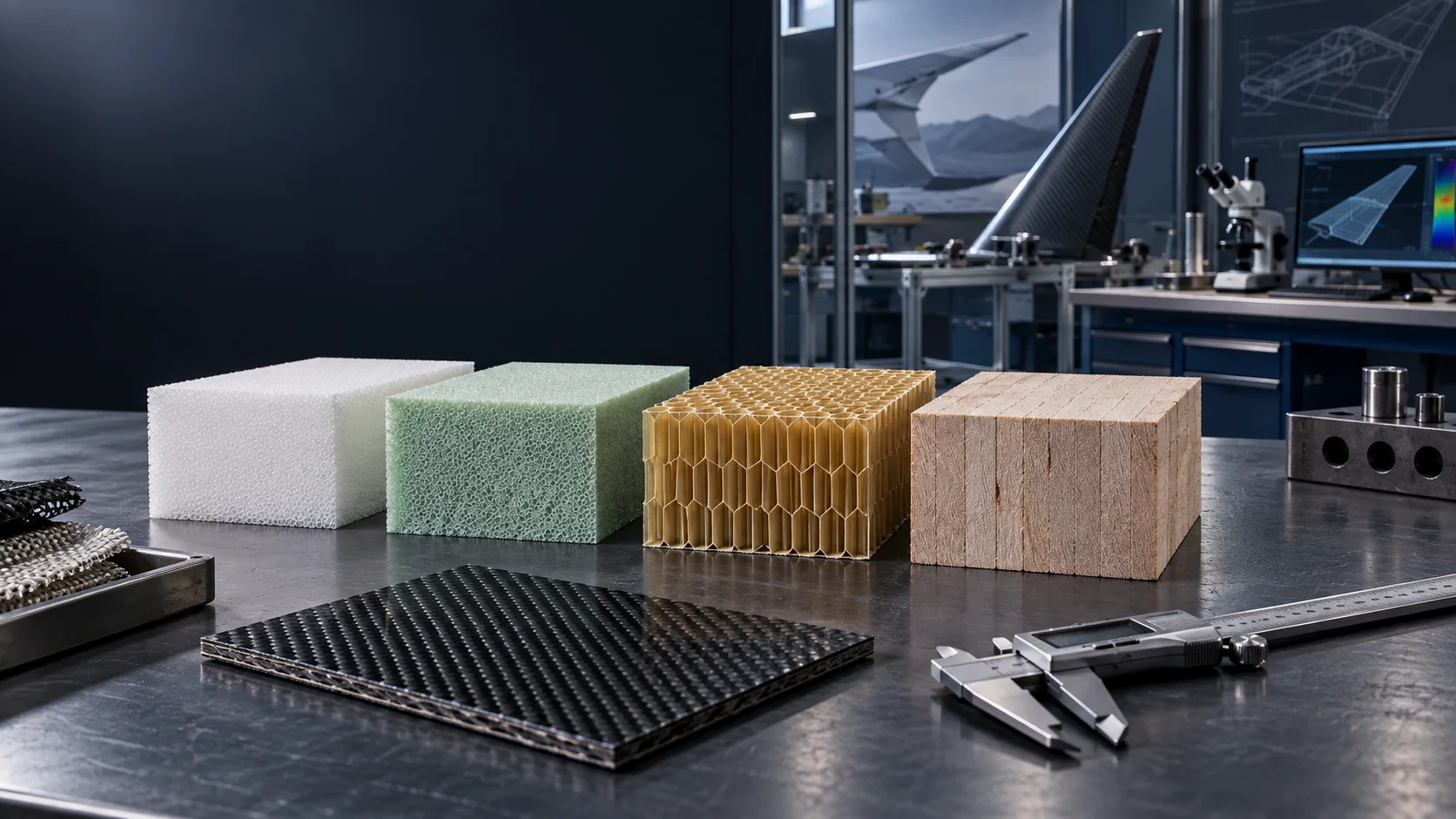
Main advantage areas
Select PMI for process and service cycle, not density alone.
- High processing temperature and pressure
- Low creep and dimensional stability
- CNC machining and thermoforming
- High specific stiffness with carbon-fibre skins
Validation in defence supply
Verify grade, cell size, batch documentation, traceability and required fire/environmental testing against the project specification.
Frequently asked questions
Which resins work with PMI?
Depending on grade and surface treatment, multiple systems—especially epoxy—may be used; manufacturer TDS governs.
Does PMI require an autoclave?
No. It can also suit infusion or press processes by grade; its advantage is tolerance to elevated temperature/pressure.
Conclusion and technical support
Compare density, temperature and process grades in our PMI foam application guide.