


Vacuum leaks often originate not at the pump but from poor selection or application of film, sealant tape, connectors, hoses and corner protection.
Short answer
The key leak-reduction consumables are temperature-rated film, substrate-compatible sealant tape, secure vacuum connectors, collapse-resistant hose/spiral and sharp-corner protection.
Why does it matter?
A small leak affects resin flow, void content and surface quality. Complete leak testing before mixing resin and record vacuum decay.
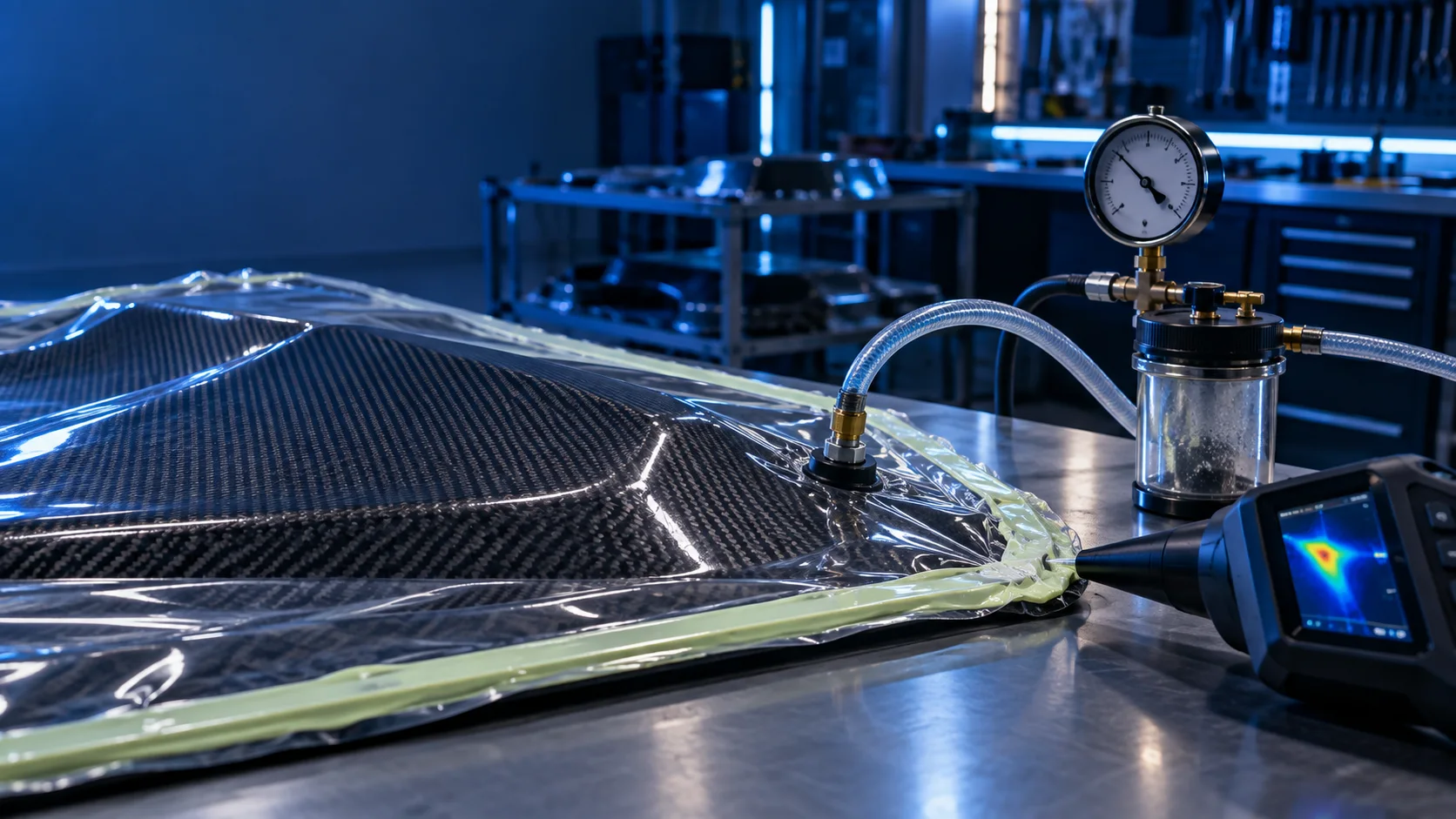
Five critical consumables
Each controls a different weak point in the system.
- Vacuum film: temperature, elongation and puncture resistance
- Sealant tape: continuous seal on a clean surface
- Vacuum port/fitting: unstressed connection through film
- Hose/spiral: collapse and resin-temperature resistance
- Corner protection/breather: prevents film puncture at sharp edges
Leak-search order
Check main lines and fittings first, then sealant perimeter and sharp corners. An ultrasonic detector or local compression can accelerate diagnosis.
Frequently asked questions
How long should a leak test run?
Duration depends on part volume and procedure; define acceptance criteria in the company/project process.
Will a second sealant-tape layer fix a leak?
It may mask the symptom; first find the root cause in surface, wrinkles or film tension.
Conclusion and technical support
Match films, tapes, fittings and auxiliaries in our infusion-consumables guide.
Sources
- Ürüne bağlı üretici TDS belgeleri ve doğrulanmış proses talimatı