

PMI, PVC, PU and honeycomb cores may all be “lightweight cores”, but occupy different decision spaces for temperature, pressure, moisture, impact, processing and cost.
Short answer
PMI can lead in high-temperature/high-pressure aerospace processing, PVC in marine and general sandwich structures, PU-based hybrids in tailored cores, and honeycomb where very low density and high specific stiffness dominate.
Why does it matter?
Comparing kg/m³ alone is misleading. Dimensional stability through cure, closed/open-cell behaviour, edge processing and resin consumption determine total cost.
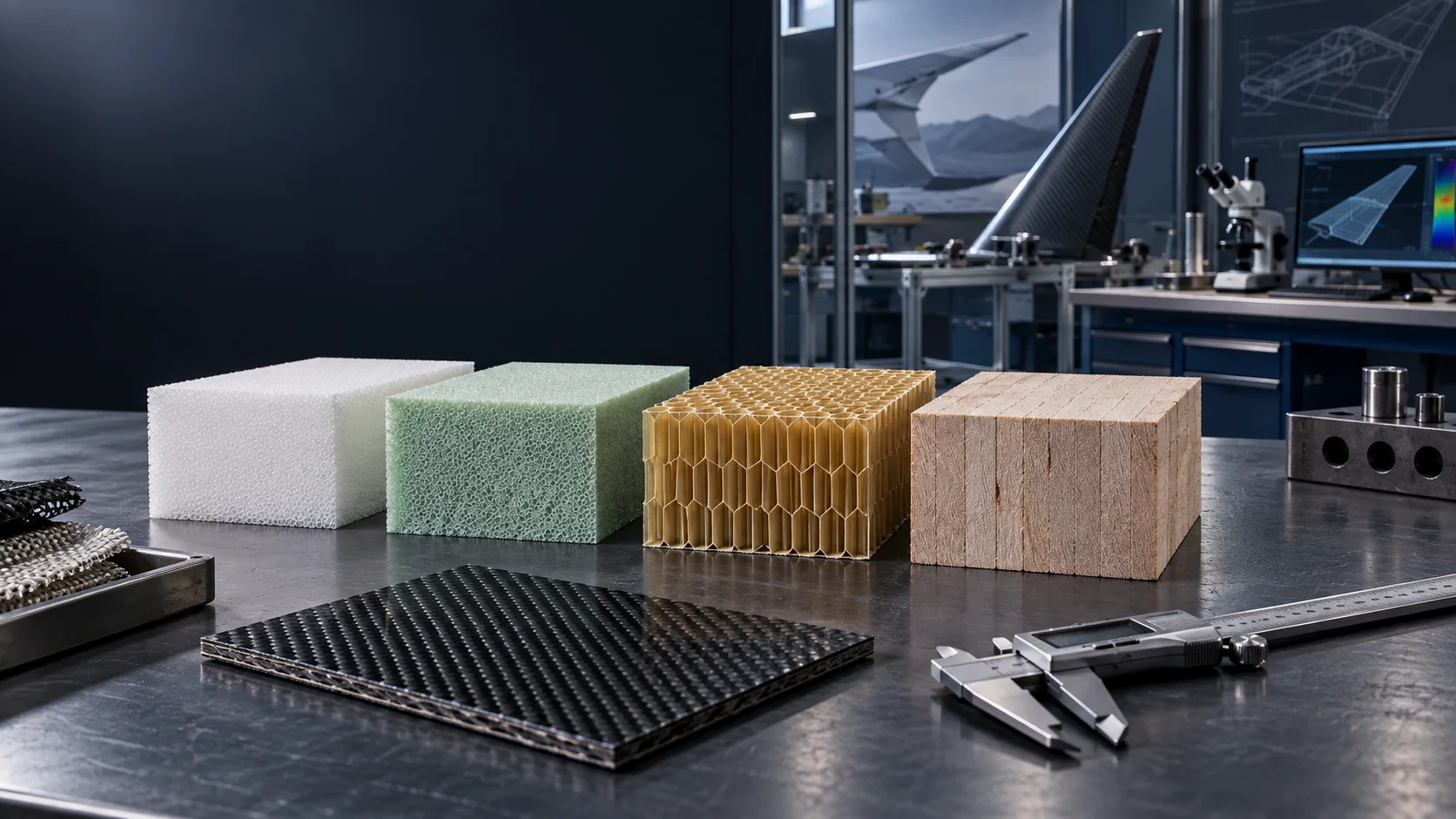
How should the decision table be read?
Filter by process temperature, narrow by mechanical loads, then finish with manufacturing and supply constraints.
- PMI: high temperature/pressure and low creep
- PVC: process flexibility and marine suitability
- PU/hybrid: tailored behaviour with 3D bridges
- Honeycomb: high specific stiffness dependent on cell direction
Cost is not just sheet price
CNC time, thermoforming, edge closure, resin uptake, scrap, cycle time and quality control form total part cost.
Frequently asked questions
Is PMI always better than PVC?
No. PMI benefits high temperature and pressure; PVC may be more suitable at lower process temperature and cost targets.
Why does honeycomb need edge closure?
Open cells can admit fluids/moisture and fill with resin, so edges and joints require design attention.
Conclusion and technical support
Compare your application with our PMI guide, PVC guide and honeycomb guide.