


Grooves, perforations, contour cuts, bonding and edge details affect PVC foam resin use, surface quality and sandwich-panel performance.
Short answer
PVC foam of the same density can consume different resin and show different local behaviour when surface cuts and infusion plan change. Core format is therefore part of the design.
Why does it matter?
Deep/wide grooves form resin channels but may add weight; insufficient perforation can increase dry-spot risk. CNC and thermoforming must avoid damaging cell structure.
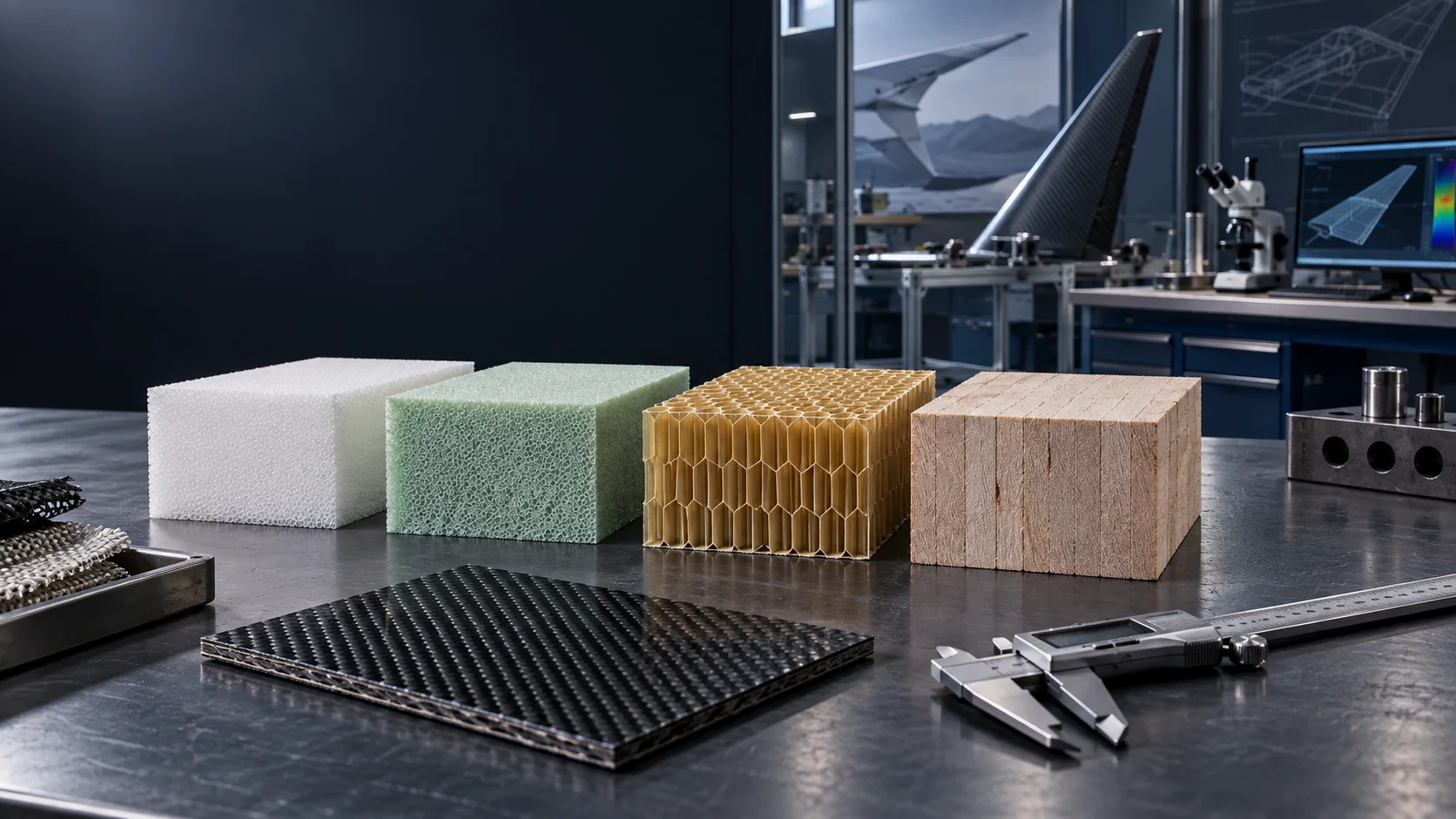
Effect of surface formats
Choose format for part geometry and resin inlet/outlet plan.
- Plain sheet: low resin uptake, limited drape
- Grid-scored: easy double-curvature forming, more resin channels
- Contour-cut: controlled drape and kitting
- Perforated: through-thickness air/resin transfer
Why is a sample panel required?
Weight, resin uptake, thickness and flexural tests reveal the real effect of a process change. Compare with the same resin, fabric and cure cycle.
Frequently asked questions
Is grooved foam always better for infusion?
No. It may accelerate flow but also increase resin use and print-through.
How should foam edges be prepared?
Avoid sharp steps; design scarfing, filling or local density increases for load and sealing requirements.
Conclusion and technical support
See the PVC foam technical guide for formats, density and sample-panel planning.
Sources
- /assets/uploads/catalogs/mycell-m-2024-02-eng-002.pdf
- Üretici TDS ve doğrulanmış numune panel test kayıtları